

- Home
- North Island
- South Island
- NZ Travel Guide
- Contact Us
Free Things to Do on Great Barrier Island
Updated: 20Th August 2026
Best Free Beaches, Walks, Hot Springs & Attractions
Discover the best free things to do on Great Barrier Island, from wild beaches and native bush walks to natural hot springs, native wildlife and spectacular stargazing. Great Barrier is made for exploring, with many of the island’s most memorable experiences found outdoors and costing nothing at all.
Explore Great Barrier Island for Free – Beaches, Walks & Natural Wonders
Great Barrier Island is one of those rare New Zealand destinations where some of the best experiences really are free. Much of the island’s appeal comes from simply being outdoors — walking through native bush, discovering quiet beaches, watching native birds, soaking in naturally heated water or finding a peaceful spot to watch the sun disappear over the Hauraki Gulf.
There are no traffic lights, shopping malls or big resort developments here. Instead, Great Barrier Island offers long stretches of coastline, small settlements, forest-covered hills and walking tracks ranging from easy short walks to challenging day hikes. Beaches such as Medlands and Awana are perfect for swimming, beach walks and picnics, while the walk to Kaitoke Hot Springs rewards you with a natural geothermal soak surrounded by native bush.
Great Barrier Island is equally impressive after dark. With exceptionally low levels of artificial light, the island has become internationally recognised for its night skies, making simply stepping outside and looking upwards one of the most memorable free experiences you can have.
Whether you have brought your own vehicle across on the ferry, hired transport locally or are exploring on foot, allow plenty of time. Great Barrier is not a destination to rush — often the best moments come from stopping at a beach, lookout or walking track simply because it looks worth exploring.
Best Free Things to Do on Great Barrier Island
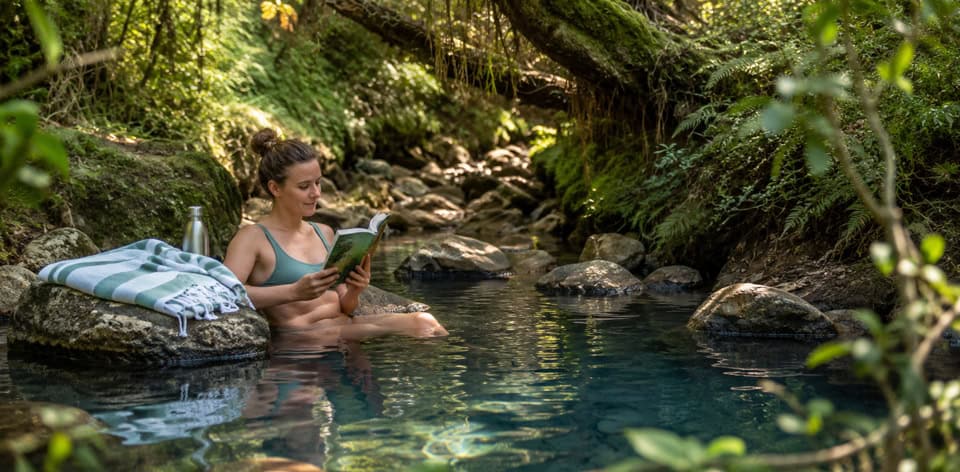
1. Walk to Kaitoke Hot Springs & Soak in the Natural Pools
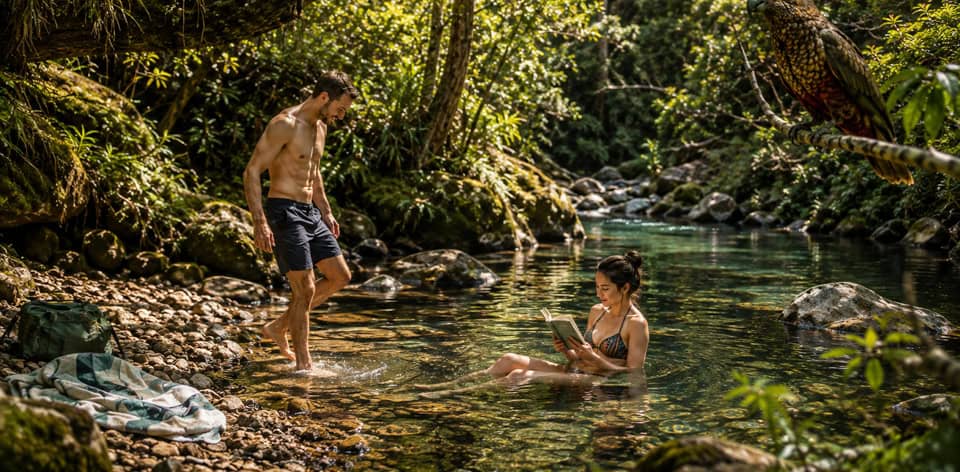
One of the best free experiences on Great Barrier Island is the walk to Kaitoke Hot Springs, where naturally heated water flows through Kaitoke Creek surrounded by native bush and ferns.
The track starts from Whangaparapara Road and initially follows an ancient shoreline before crossing the Kaitoke wetlands on boardwalks and continuing through regenerating kānuka forest. DOC grades it as an easy walk, and the hot springs are reached in about 45 minutes. Along the way, listen for fernbirds and spotless crakes and look for orchids and native sundews around the wetland.
The pools themselves are wonderfully simple and natural — don’t expect a developed thermal complex. Find a comfortable spot in the creek and enjoy a soak surrounded by bush.
Good to know: The water can be very hot in places. DOC also advises visitors not to put their heads under the water.
Allow: Around 2 hours return, longer if you plan to soak.
2. Spend a Few Hours at Medlands Beach
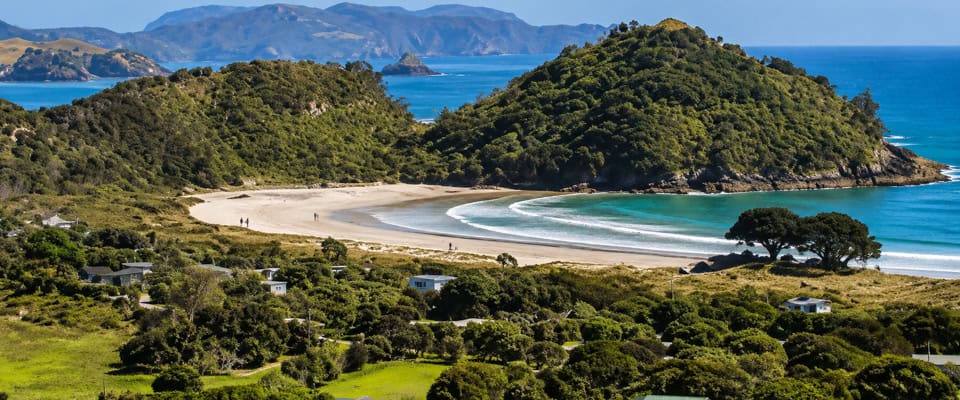
Oruawharo / Medlands Beach is one of Great Barrier Island’s classic east-coast beaches: a long sweep of pale sand backed by dunes and coastal vegetation, with plenty of room for walking, swimming, surfing or simply finding somewhere quiet to sit.
At the northern end, pōhutukawa and nīkau line the headland and provide a beautiful setting for swimming when conditions are calm. Around the centre of the beach is Memory Rock, which provides a viewpoint over the coastline, while tidal pools can be explored nearby when conditions and tides are suitable.
Keep an eye out for native shorebirds too. Dotterels and oystercatchers nest and feed around this coastline, so give birds plenty of space and respect any temporary nesting areas.
Good to know: Medlands is a surf beach. Conditions can change, so choose where and when you swim according to the conditions on the day.
3. Discover Awana Beach
Continue north along Great Barrier’s eastern side to Awana Beach, another of the island’s dramatic surf beaches.
Awana tends to feel wonderfully uncrowded and is a great place for a long beach walk, watching the waves, having a picnic or simply stopping while exploring the island. The wider Aotea beach network ranges from sheltered family-friendly bays to the more exposed surf beaches at Medlands, Awana and further north.
It’s also worth remembering that the journey is part of the experience on Great Barrier. Don’t rush from attraction to attraction. Stop when a beach or viewpoint catches your eye and give yourself time to explore.
Best for: Beach walking, photography, picnics and enjoying the wild east coast.
4. Walk Through Windy Canyon
For a relatively short walk with a big scenic reward, Windy Canyon should be high on your list.
The track begins at the top of Whangapoua Hill on Aotea Road and climbs numerous steps between dramatic rock faces. DOC gives the walk to Windy Canyon as approximately 15 minutes one way. From the canyon there are views north across Okiwi Basin and Whangapoua Beach and estuary, and east towards Kaitoke and Medlands.
You can turn around after enjoying Windy Canyon or continue onto Palmers Track for a much longer walk towards Hirakimata / Mt Hobson.
Good to know: DOC warns that the natural rock lookout can be slippery and has a significant fall risk. Wear sturdy footwear and take particular care around exposed edges. There is no water available on the track.
Allow: About 30–45 minutes for Windy Canyon alone.
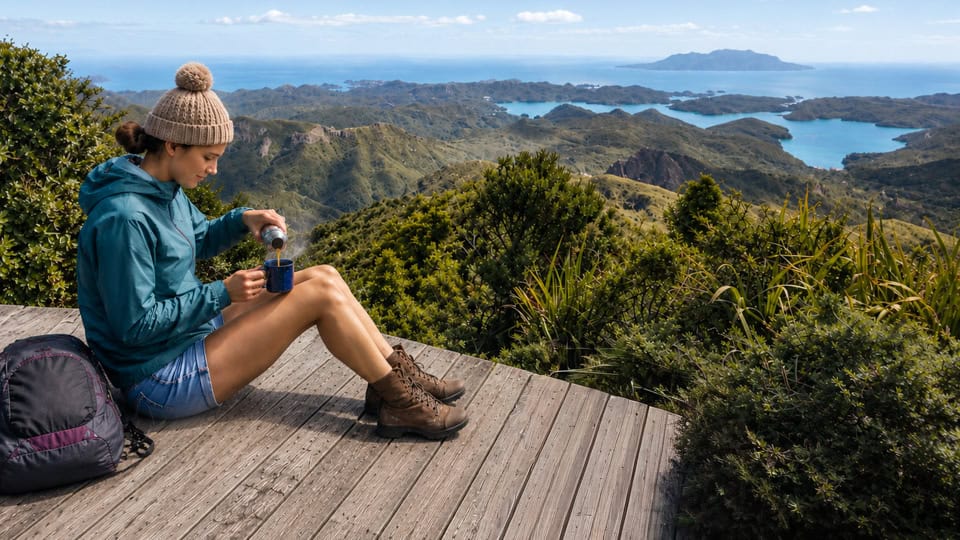
5. Climb Hirakimata / Mt Hobson for 360° Island Views
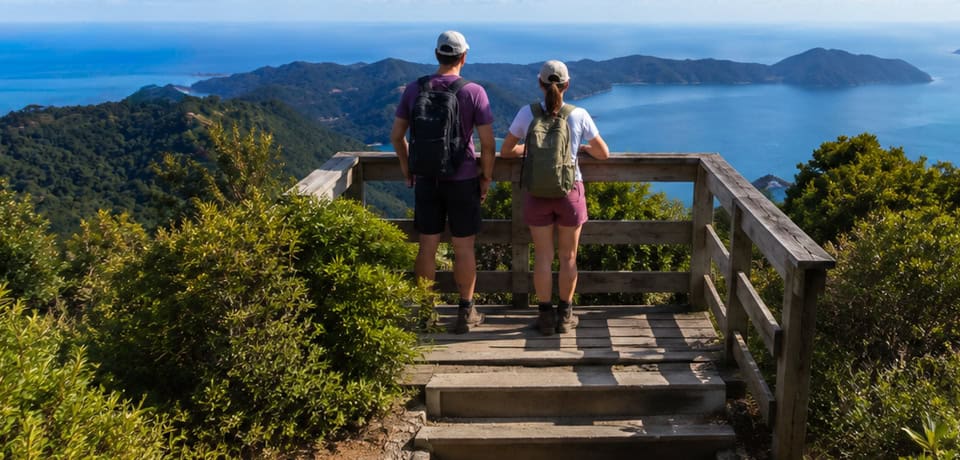
If you want something more challenging, continue beyond Windy Canyon along Palmers Track to Hirakimata / Mt Hobson, the highest point on Great Barrier Island.
DOC lists Palmers Track at around 3 hours return. The route follows the ridge before climbing steeply via steps and stairways towards the summit, where the reward is an exceptional panoramic view across the island and surrounding Hauraki Gulf.
The mountain is important for wildlife too. Rare species found around Hirakimata include kākā, kākāriki, tomtit/miromiro, North Island robin/pītoitoi and the black petrel/tāiko.
This is considerably more demanding than the short Windy Canyon walk. Beyond the lookout, DOC classifies the route as a tramping track and recommends proper hiking footwear, water and preparation for changing weather.
Best for: Fit walkers looking for one of Great Barrier Island’s best free viewpoints.
6. Look & Listen for Great Barrier Island’s Native Birds
You don’t need to join a wildlife tour to start discovering Great Barrier’s birdlife. Native bush, wetlands, beaches and walking tracks provide opportunities to hear and sometimes see species that are becoming increasingly difficult to encounter elsewhere.
The island is home to kākā and kākāriki, while Hirakimata supports species including tomtit, North Island robin and black petrel. Around Kaitoke wetlands you may hear fernbirds and spotless crakes, while Medlands is home to shorebirds including dotterels and oystercatchers.
The best approach is often simply to slow down and listen. Early morning and late afternoon can be particularly rewarding in the bush.
Keep your distance from nesting birds, remain on marked tracks and don’t disturb burrows or nesting areas.
7. Stargaze in an International Dark Sky Sanctuary
Great Barrier Island becomes a completely different destination after sunset.
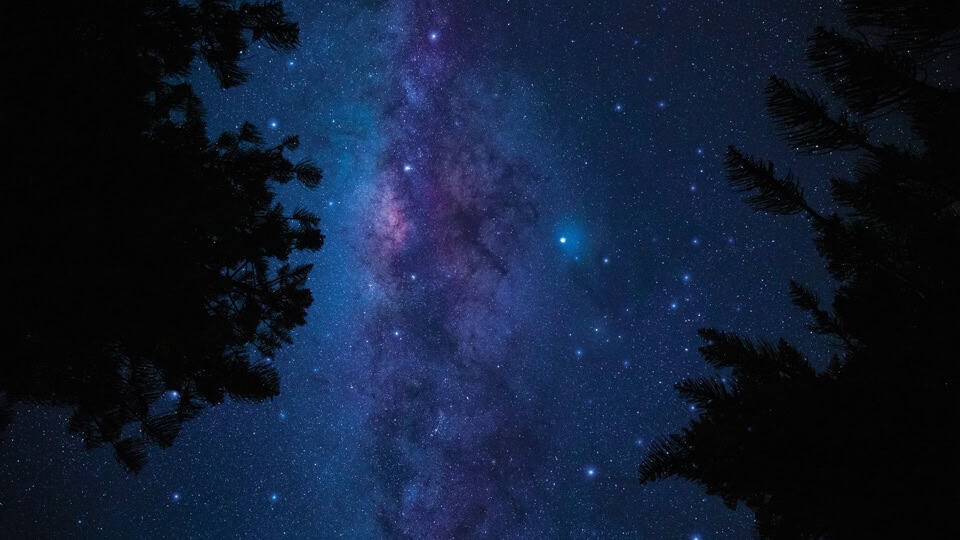
The entire island is recognised as a Dark Sky Sanctuary, with exceptionally low levels of artificial light. On a clear, moonless night you can simply step outside and see a night sky that many city dwellers rarely experience.
Beaches are particularly good places for independent stargazing because they provide open horizons away from hills and trees. The local Great Barrier destination organisation recommends checking the beach during daylight first, carrying a torch — preferably red to preserve night vision — and remaining safely above the high-tide mark.
You don’t need equipment. Lie back, allow your eyes time to adjust and look for the Milky Way, planets, satellites and constellations.
Good to know: Guided stargazing experiences are also available on Great Barrier, but watching the night sky independently costs nothing.
8. Explore Whangaparapara & Its Historic Tracks
Whangaparapara combines harbour scenery, native bush and reminders of Great Barrier Island’s industrial past.
From Whangaparapara Road you can explore sections of the old Tramline Track, which follows routes associated with the Kauri Timber Company’s logging operations. The Whangaparapara end reaches Forest Road in around 1 hour, while the complete Tramline Track is a much more demanding journey.
Another option is Te Ahumata Track, which follows an old mining road between Whangaparapara and Blind Bay roads. A gradual 30-minute climb reaches a junction, followed by another approximately 30-minute branch walk to the 398 m summit. The reward is panoramic views and unusual wind-shaped native vegetation.
This is an excellent area for visitors who enjoy combining walking with a little of the island’s history.
9. Explore Port FitzRoy & the Northern Bays
The sheltered western and northern coastline around Port FitzRoy feels quite different from Great Barrier’s exposed eastern surf beaches.
Take time to explore the harbour scenery, wharf area and surrounding bays, or turn your visit into a walk. One option for experienced walkers is Cooper’s Castle Track, which climbs through forest from the Port FitzRoy/Okiwi Hill area. A short detour from the track reaches a volcanic-rock lookout with extensive views across Okiwi Basin and Whangapoua estuary.
You don’t need to complete a major walk, though. Driving the northern roads, stopping at viewpoints and discovering sheltered bays is part of the pleasure of exploring this end of the island.
10. Discover Tryphena’s Beaches & Bays
For many ferry passengers, Tryphena is their introduction to Great Barrier Island, but don’t treat it simply as an arrival point.
The southern part of the island has several sheltered bays and beaches that are ideal for relaxed exploring. The island’s beach network includes Gooseberry Flat, Pa Beach and Mulberry Grove, providing a contrast to the larger surf beaches on the eastern side.
Pack something to eat, find a beach that appeals and spend a couple of hours doing very little — swimming when conditions are suitable, beachcombing, reading or watching boats moving through the bay.
That slower pace is part of the Great Barrier experience.
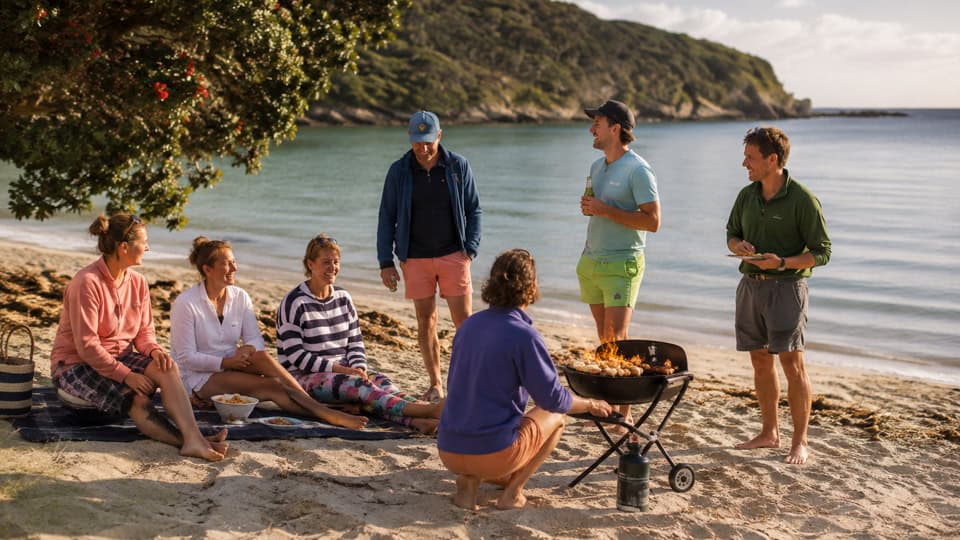
11. Pack a Picnic & Find Your Own Favourite Beach
Medlands and Awana may receive much of the attention, but Great Barrier Island has an extraordinary variety of beaches and bays.
Depending on where you’re travelling, you might discover Blind Bay, Whangapoua, Harataonga, Katherine Bay, Okupu, Schooner Bay or one of the smaller coves scattered around the coastline.
Rather than trying to tick them all off a list, choose one or two and spend some time there. Take a picnic, swimming gear and a camera and enjoy having nowhere else you need to be.
This is one of the reasons Great Barrier works so well as a budget destination: the landscape provides the entertainment.
12. Take a Great Barrier Island Scenic Drive
Great Barrier isn’t a large island, but don’t judge driving times by distance alone. The roads wind through hills, bush, small settlements and coastal country, and there are plenty of reasons to stop along the way.
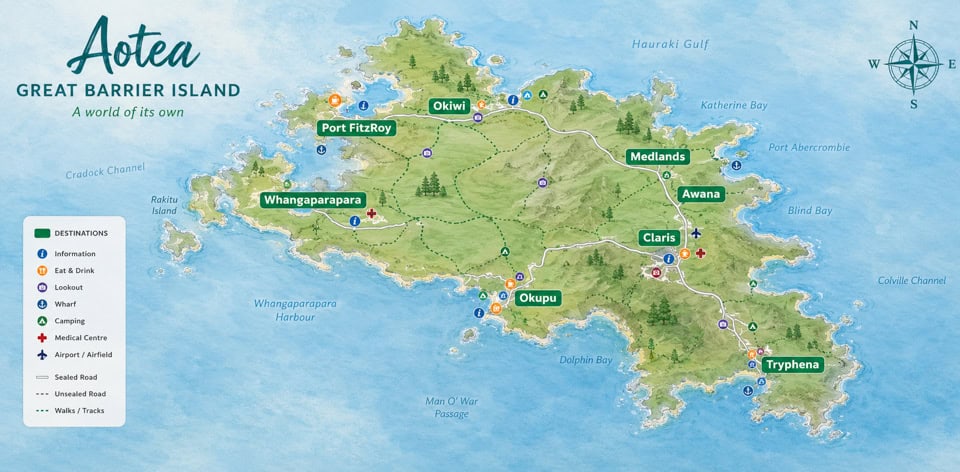
A day spent travelling between Tryphena, Claris, Medlands, Awana, Okiwi and Port FitzRoy, stopping for beaches, short walks and viewpoints, can become an experience in itself.
Use our Great Barrier Island map to plan the general direction of your day, but leave some flexibility. A beach you hadn’t planned to visit, a kākā appearing beside the road or a viewpoint you weren’t expecting may end up being the highlight.
Are these Great Barrier Island activities really free?
Yes. The beaches, natural attractions and DOC walking tracks featured above can be explored without an admission charge. If you turn a walk into an overnight trip, DOC hut or campsite charges may apply, and transport, food and equipment remain your own costs. Always check current track conditions and safety information before setting out.
Planning Your Great Barrier Island Trip?
Free beaches, walks, hot springs and stargazing are only part of what makes Great Barrier Island worth visiting. If you’re planning a longer stay, explore our complete Things to Do on Great Barrier Island guide for more ideas, including local tours, activities, transport information and ways to experience different parts of the island.
Explore Things to Do on Great Barrier Island →
If you’re visiting without your own vehicle, Great Barrier Island car rental options are available, including vehicles equipped with rooftop tents and camping gear.
Before You Explore Great Barrier Island
A little preparation goes a long way when exploring Great Barrier Island. Many of the island’s best free experiences take you away from shops, settlements and reliable mobile coverage, so plan your day before setting out.
Download maps and track information before you leave. Mobile reception is available around many of the main settlements, but coverage is not available everywhere on the island.
Carry water, food and an extra layer. Even on a short walk, conditions can change quickly. Longer walks such as Hirakimata / Mt Hobson require suitable footwear, enough water and clothing appropriate for changing weather.
Check track and weather conditions. DOC tracks range from easy walks to genuine tramping tracks. Choose a walk that suits your fitness and experience, and tell someone where you are going if heading into the backcountry.
Help protect Great Barrier’s wildlife and native bush. Stay on marked tracks, keep away from nesting birds and use track cleaning stations where provided. Check your footwear, bags and outdoor equipment for soil, seeds and unwanted pests before travelling to the island.
Take your rubbish with you. Great Barrier’s undeveloped character is one of the reasons it is so special. Leave beaches, picnic spots, walking tracks and natural areas as you found them for the next visitor to enjoy.
Getting Around Great Barrier Island to Explore for Free
Great Barrier Island’s beaches, walking tracks, hot springs and scenic lookouts are spread across the island, so having your own transport makes exploring much easier. Great Barrier is almost 45 kilometres long, and there is no regular island-wide public transport service, so it pays to think about how you will get around before you arrive.
If you bring your own vehicle across on the ferry, you can explore independently and stop whenever a beach, walking track or viewpoint catches your eye. Rental vehicles, local shuttles and other transport options are also available on the island, although availability can become limited during the busy summer months.
Don’t underestimate travelling times. Great Barrier’s roads are often narrow and winding, and getting from one end of the island to the other takes longer than the distance on a map might suggest. Rather than trying to see everything in a single day, explore one part of the island at a time.
A day around Medlands and Awana works well for beaches and coastal scenery, while Okiwi and Port FitzRoy can be combined when exploring the north. Allow a separate day if you plan to walk to Kaitoke Hot Springs, Windy Canyon or Hirakimata / Mt Hobson — these are places to enjoy rather than rush through.
Great Barrier Island Free Things FAQs
Are these Great Barrier Island activities really free?
Yes. The beaches, natural attractions and DOC walking tracks featured above can be explored without an admission charge. DOC hut or campsite fees apply if you turn a walk into an overnight trip, while transport, food and equipment are additional costs. Always check current track conditions and weather before setting out.
What is the Kaitoke Hot Springs walk like and how long does it take?
The Kaitoke Hot Springs Track starts from Whangaparapara Road and passes through wetlands and regenerating native forest before reaching the natural hot pools. DOC grades it as an easy walk, taking about 45 minutes each way. Allow around two hours for the return trip if you want time to enjoy a soak.
Can I go stargazing on Great Barrier Island for free?
Yes. Great Barrier Island is an International Dark Sky Sanctuary with exceptionally low levels of artificial light, so you can enjoy the night sky independently at no cost. Choose a safe, open location on a clear night and allow your eyes time to adjust to the darkness. Guided stargazing experiences are also available if you want a more detailed introduction to the night sky.
How long is the Windy Canyon walk?
Windy Canyon is a relatively short walk, taking about 15 minutes each way from the road. Allow around 30–45 minutes to enjoy the walk and views. The natural rock lookout can be slippery and has exposed edges, so wear sturdy footwear and take care around the viewpoint.
How difficult is the Hirakimata / Mt Hobson walk?
The walk to Hirakimata / Mt Hobson via Palmers Track is considerably more demanding than Windy Canyon and takes around three hours return. Beyond Windy Canyon, DOC grades the route as a tramping track. Wear suitable hiking footwear, carry water and an extra layer, and be prepared for changing weather. The reward is outstanding panoramic views across Great Barrier Island and the surrounding Hauraki Gulf.