

- Home
- North Island
- South Island
- NZ Travel Guide
- Contact Us
Greymouth to Haast: The Ultimate West Coast Driving Guide
Updated: 23rd July 2026

Franz Josef, Fox Glacier, Lake Matheson & Ōkārito — What to See Along the Way
South of Greymouth, the road narrows and the coast turns wilder. This stretch takes you through rainforest river valleys, past Ōkārito and Lake Matheson, and into glacier country at Franz Josef and Fox Glacier, where ancient ice descends almost to sea level through native bush. It’s a longer drive than it looks on the map, with plenty worth stopping for along the way. Here’s what to see between Greymouth and Haast.
Allow Extra Time: This isn’t just a drive—it’s one of New Zealand’s most scenic coastal journeys. Plan plenty of stops for walks, photography and wildlife viewing rather than driving straight through.
Quick Facts:
- Distance: Approximately 315 km
- Driving Time: Around 4 hours 15 minutes (non-stop)
- Recommended Time: 2–3 days to fully enjoy the attractions
- Road: State Highway 6 (SH6)
- Best Overnight Stops: Hokitika, Franz Josef or Fox Glacier
- Fuel Available: Greymouth, Hokitika, Ross, Franz Josef, Fox Glacier and Haast
- Suitable For: Cars, motorhomes, campervans and motorcycles
- Top Highlights: Hokitika Gorge, White Heron Sanctuary, Ōkārito, Franz Josef Glacier, Fox Glacier, Lake Matheson, Bruce Bay, Knights Point, Ship Creek and Jackson Bay
Greymouth To Franz Josef
Heading south from Greymouth — home to Shantytown Heritage Park if you haven’t already stopped in — the road settles into rainforest and river flats, reaching Hokitika in about twenty minutes.
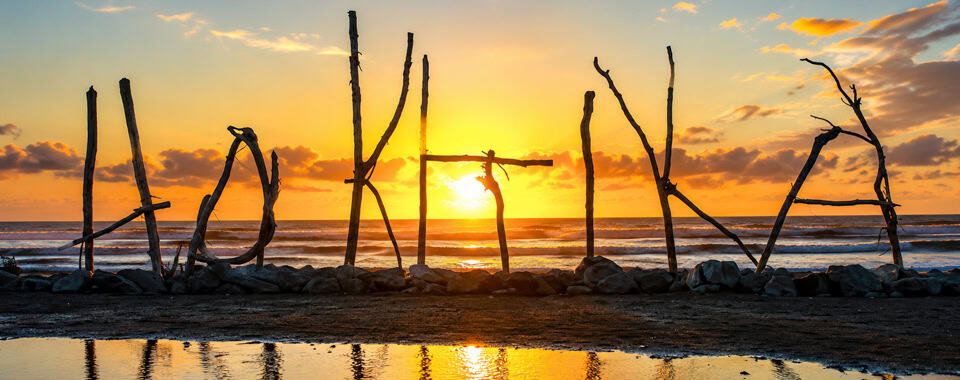
Hokitika is worth more than a drive-through. It’s known for its wild driftwood-strewn beach, right at the edge of town, and for its long association with pounamu (greenstone) — several jade carving workshops around town let you watch carvers at work, and a few offer the chance to try it yourself. There’s also a glass-blowing studio in town, another good stop if you want to see local craft up close rather than just buy it in a shop.
Good idea: As covered on our Christchurch to Greymouth page, Hokitika makes the better overnight base over Greymouth itself — there’s more to fill an evening here, and the Glow Worm Dell is worth the after-dark walk if you haven’t already seen it. If you don’t have a car, our [Hokitika Scenic Tours page] covers guided options for seeing the town and surrounding area without needing to drive yourself.
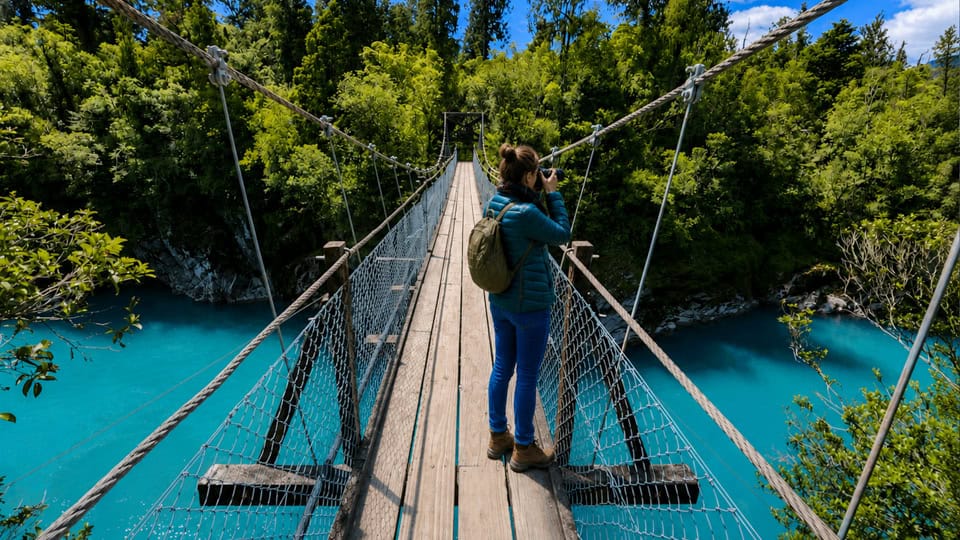
Before you leave town, set aside a few hours for the Hokitika Gorge, about 35 minutes inland. It’s one of the most striking short stops on the whole West Coast — a swing bridge over impossibly turquoise glacial water, framed by rainforest. The drive to Franz Josef isn’t long, so there’s no need to rush this one.
As you continue south, Lake Kaniere is worth the short detour too — a still, forest-ringed lake with several short walks and a swimming spot on a warm day.
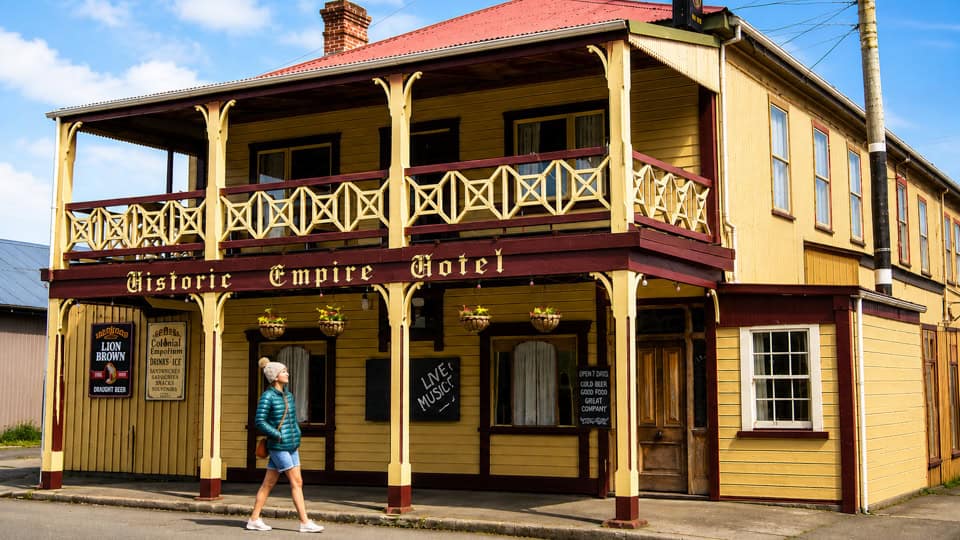
Ross, a small former gold town where nuggets are still occasionally found today, is next. The Historic Empire Hotel (19 Aylmer Street) is the last of the bawdy establishments that once lined Ross’s gold-rich streets, and still runs a roaring fire, full dinner buffets, and gold panning — on the last Friday of the month, it’s worth timing your visit around if you can.
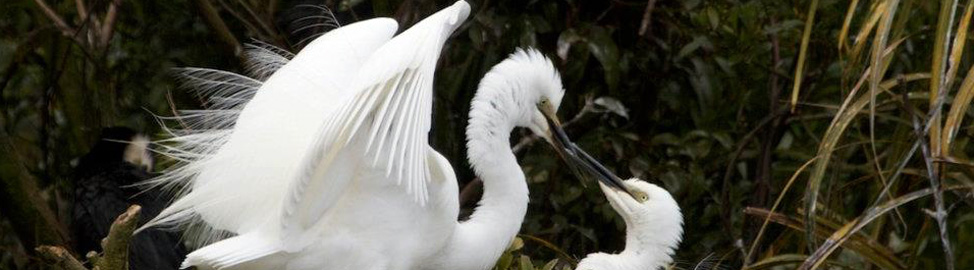
From Ross, it’s about an hour (76 km) to Whataroa, departure point for White Heron Sanctuary Tours — the only way to see New Zealand’s sole nesting colony of kōtuku (white heron), hidden in a protected reserve upriver. Check tour times on our [White Heron Guided Sanctuary Tours page] before you arrive, since trips run to a set schedule.
From Whataroa, it’s a short 25-minute, 31 km run to Franz Josef, for an overnight stop in glacier country.
Ōkārito, just 24 minutes from Whataroa, is easily done as a day trip from Franz Josef rather than a stop on the way through
Franz Josef
Franz Josef is the natural place to spend the night on this stretch — a small township that serves as the gateway to one of the world’s most extraordinary landscapes, where the Franz Josef Glacier descends from the Southern Alps almost into the surrounding rainforest.
There’s enough here to fill anywhere from a few hours to a full day, without needing to move on. Ōkārito, just 24 minutes away, makes an easy day trip if you haven’t already covered it — with its own kayaking operator on the lagoon, alongside walks and birdwatching boat trips. See our [nformation on Ōkārito] for the full range of activities on offer there.
Closer to Franz Josef itself, Lake Mapourika offers two ways to get out on the water: a separate kayaking operator runs trips across the lake, known for its mirror reflections of snow-capped mountains and glaciers on a still day, while a small-group boat cruise is a more relaxed way to take in the same views without paddling yourself.
For the full range of things to do in the township itself, see our [Franz Josef page] — and if you’re keeping an eye on the budget, our [Free Things to Do in Franz Josef page] covers plenty of ways to experience the area without spending a cent.
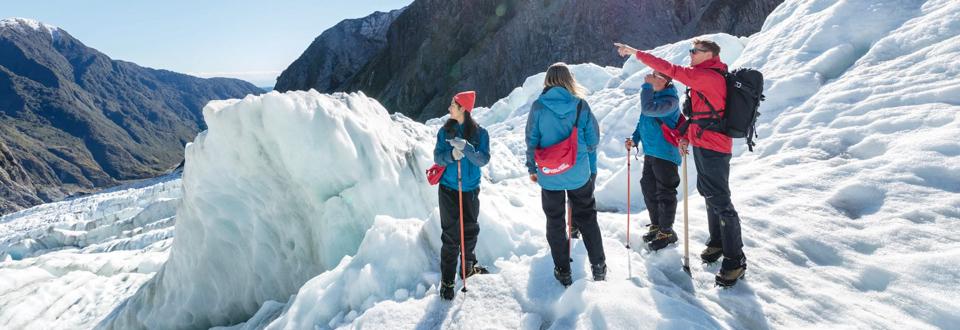
The glacier is the reason most travellers come this far south, and it’s worth understanding why it’s so unusual before you see it: most glaciers descend into alpine meadows or barren valleys, but Franz Josef drops out of the Southern Alps almost to the level of the surrounding temperate rainforest — a combination that shouldn’t really exist, and doesn’t anywhere else in the world quite like this.
Ground-level access to the glacier itself has changed a lot in recent years — retreat has pushed the ice much further up the valley than it once was, so the classic “walk right up to the ice” experience isn’t what it used to be. That’s part of why scenic flights have become the best way to properly appreciate it. A helicopter or small plane flight over the glacier reveals the full extent of the ice field, the route it carves down the mountain, and the surrounding peaks — with many flights including the option of a snow landing right on the ice itself, genuinely one of the more memorable things you can do on this trip.
For a more active way onto the ice, heli-hiking combines a scenic flight with a guided walk directly on the glacier — the only way to actually set foot on it now that ground-level access has retreated so far up the valley.
Back down in the valley, guided walks through the surrounding rainforest explain the area’s geology and ecology and give a good sense of scale, and for something different, quad bike adventures cover the wider valley terrain at a faster pace.
Good idea: book scenic flights and heli-hikes in advance, before you arrive — they’re popular, and spots fill up quickly in peak season, so booking ahead gives you the best chance of getting the time slot you want.
Fox Glacier
Just a short drive south of Franz Josef, Fox Glacier is the quieter alternative — a smaller township with far fewer crowds, but scenery every bit as dramatic. The glacier itself is comparable in scale to Franz Josef, descending from the Southern Alps toward the coast, with the Tasman Sea never far away.
Fox makes a genuine alternative overnight base to Franz Josef, particularly if you’d rather stay somewhere quieter after a day of sightseeing, or if accommodation in Franz Josef is booked out. There are fewer tour operators based here than in Franz Josef, so most visitors base themselves in one town or the other and treat the second as a scenic stop rather than a place to book activities — Fox’s own scenic flights over the glacier are the main exception, and a good option if Franz Josef’s are booked out or weathered off.
Good idea: if you’re deciding between the two, Franz Josef has the wider range of activities and operators, while Fox offers a quieter overnight stay with easy access to Lake Matheson the next morning.
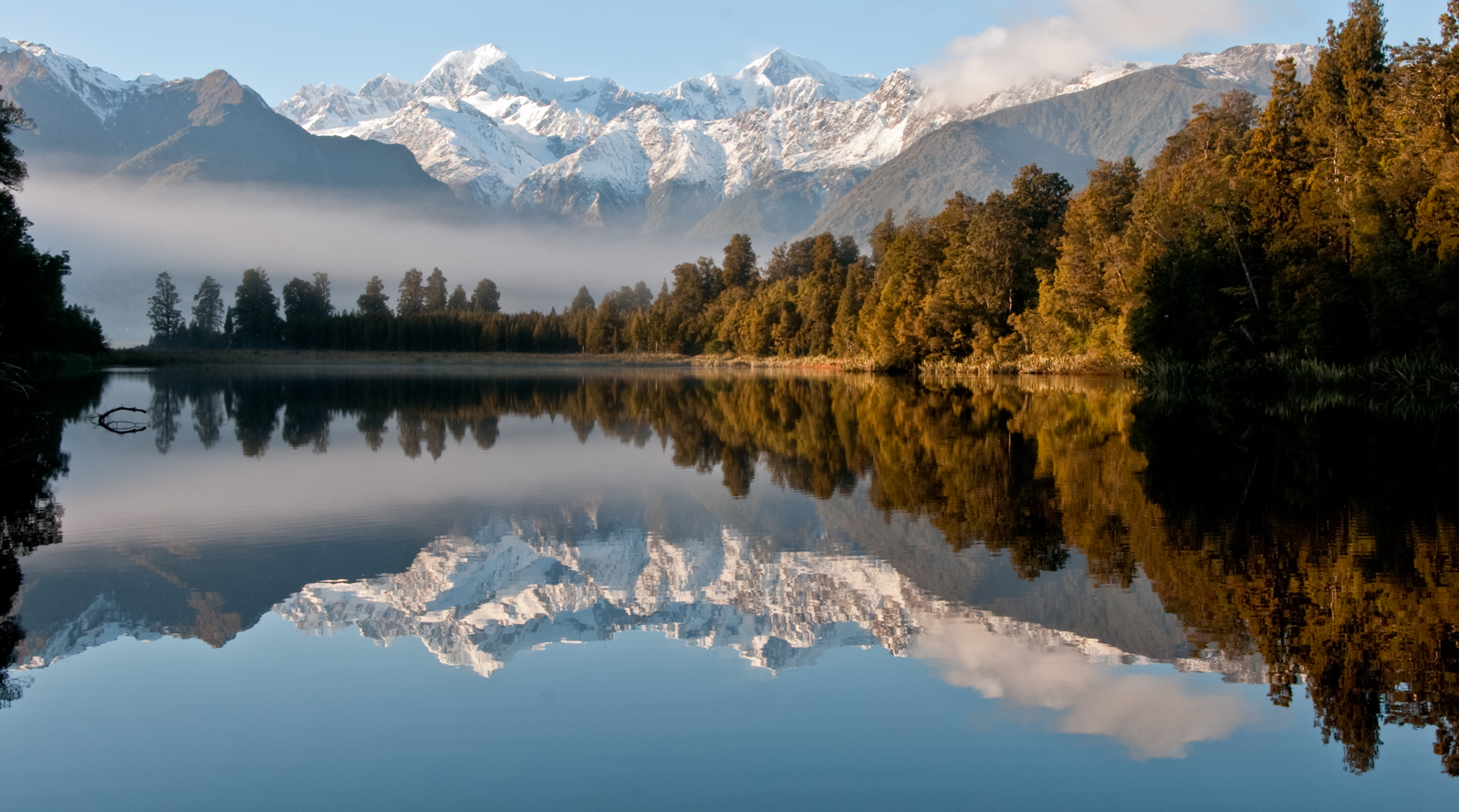
Lake Matheson
Just a few minutes from Fox Glacier township, Lake Matheson is one of the most photographed spots on the entire West Coast — and for good reason. On a still morning, the lake’s dark, tannin-stained water turns to glass, perfectly mirroring Aoraki/Mt Cook and Mt Tasman on the horizon.
A well-formed walking track circles the lake through native rainforest, taking around 1.5 to 2 hours for the full loop, with several viewing platforms along the way. The most famous of these is the “Jetty” viewpoint, the classic postcard shot of the mountains reflected in the water.
Good idea: reflections are best in the early morning, before the wind picks up and the water loses its mirror-like stillness — worth setting an alarm for if you want the classic shot, rather than visiting later in the day.
Bruce Bay, Knights Point & Ship Creek
The drive from Fox Glacier to Haast covers about 120 km (75 miles) and takes around 1.5 to 2 hours — longer if you stop often, which this stretch rewards.
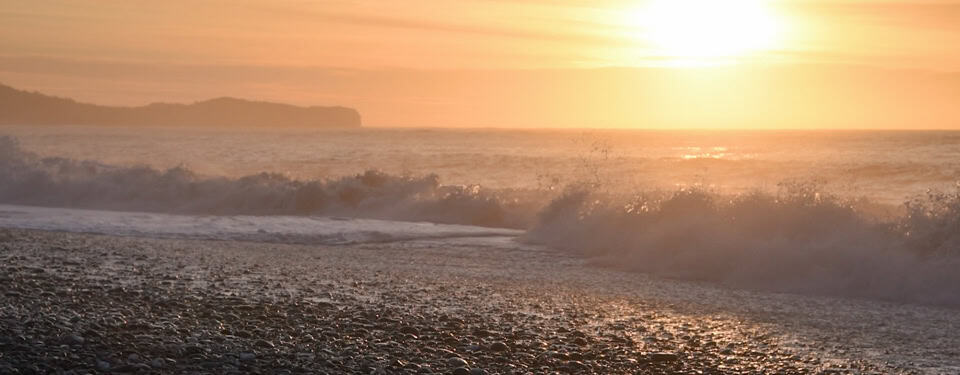
Bruce Bay is a good first pause, a long stretch of beach where the rainforest runs almost to the waterline. Knights Point Lookout follows, with sweeping coastal views back along the wild, largely untouched shoreline — one of the best photo stops on the whole drive south.
Closer to Haast, Ship Creek is worth the short detour off the highway. Two easy boardwalk loops lead through rainforest and out onto the beach — the Kahikatea Swamp Forest walk winds through ancient swamp forest, while the Dune Lake walk crosses dunes to a wild stretch of Tasman Sea coastline. Both take only 15–20 minutes and are an easy way to stretch your legs before reaching Haast.
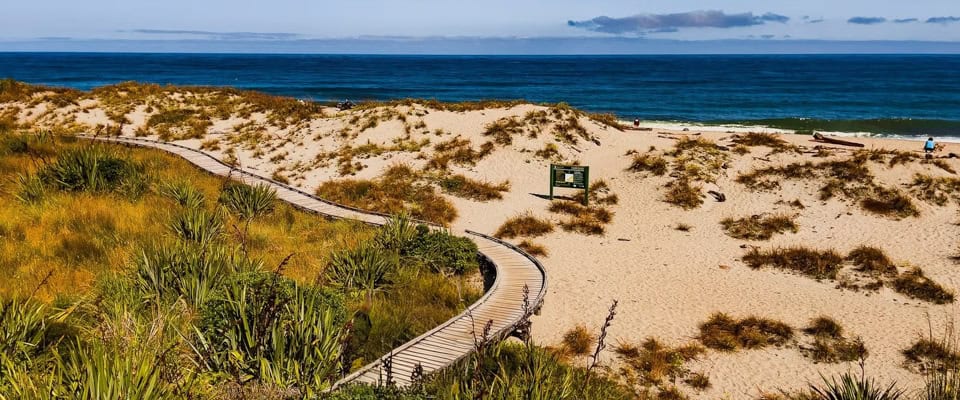
Arriving at Haast — and Jackson Bay
Haast marks the end of this stretch of coast, and a natural place to spend the night before tackling the Haast Pass ahead. It’s a small, remote township, but a good base to break the journey, with a handful of accommodation options and places to eat.
If you have time before dark, it’s worth the extra half-hour drive out to Jackson Bay — the end of the road, quite literally, and one of the most remote settlements in New Zealand. A small fishing harbour, a short forest walk, and views out toward Fiordland’s distant peaks make it a worthwhile detour for those not in a rush.
Good idea: if you’re travelling outside whitebait season (roughly August to November), don’t worry — most local cafés keep frozen stock on hand, so whitebait fritters and sandwiches, a genuine West Coast specialty, are usually still on the menu year-round.
Frequently Asked Questions About Driving from Greymouth to Haast
What are the main places to see between Greymouth and Haast along the West Coast?
Answer:
The drive passes through rainforest river valleys, with stops such as Hokitika for its driftwood beach and pounamu (greenstone) crafts, Whataroa for White Heron Sanctuary Tours, Franz Josef and Fox Glacier with their remarkable glacial landscapes, Lake Matheson for its famous mountain reflections, and then coastal highlights including Bruce Bay, Knights Point, Ship Creek and Haast. If time allows, continue to Jackson Bay at the very end of the road for one of New Zealand’s most remote coastal experiences.
Why is Hokitika recommended as a better overnight base than Greymouth?
Answer:
Hokitika offers more to enjoy after the day’s drive, including its wild driftwood beach, jade carving workshops and a glass-blowing studio. After dark, the nearby Glow Worm Dell provides another memorable experience. With a wider range of attractions and accommodation, Hokitika is an excellent overnight base before continuing south along the West Coast.
What makes Franz Josef Glacier special and how should I experience it?
Answer:
Franz Josef Glacier is one of the few glaciers in the world that descends from the Southern Alps almost to sea level through temperate rainforest. As the glacier has retreated, ground access is now limited, making scenic helicopter or fixed-wing flights and heli-hike experiences the best ways to appreciate the ice. Guided valley walks are also available for visitors wanting to learn more about the area’s unique geology and rainforest environment.
How can I best experience Lake Matheson and its famous reflections?
Answer:
Lake Matheson is renowned for its mirror-like reflections of Aoraki / Mount Cook and Mount Tasman on calm mornings. The easy 1.5 to 2-hour walking loop passes several viewing platforms, including the famous Jetty viewpoint. For the clearest reflections, visit early in the morning before the wind disturbs the water.
What are the best stops between Fox Glacier and Haast?
Answer:
South of Fox Glacier, Bruce Bay is a beautiful place where rainforest meets the Tasman Sea, while Knights Point Lookout offers sweeping coastal views. Closer to Haast, Ship Creek features easy boardwalks through ancient kahikatea swamp forest and dunes leading to the wild coastline. Together these stops showcase some of the West Coast’s most spectacular scenery.
Is Jackson Bay worth visiting?
Answer:
Yes. Located about 30 km from Haast, Jackson Bay marks the end of the road on New Zealand’s West Coast. The small fishing settlement offers peaceful harbour views, short forest walks and a true sense of remoteness. If you have extra time before crossing Haast Pass, it’s a worthwhile detour and a memorable way to finish your West Coast road trip.