Page Created: 25th July 2026
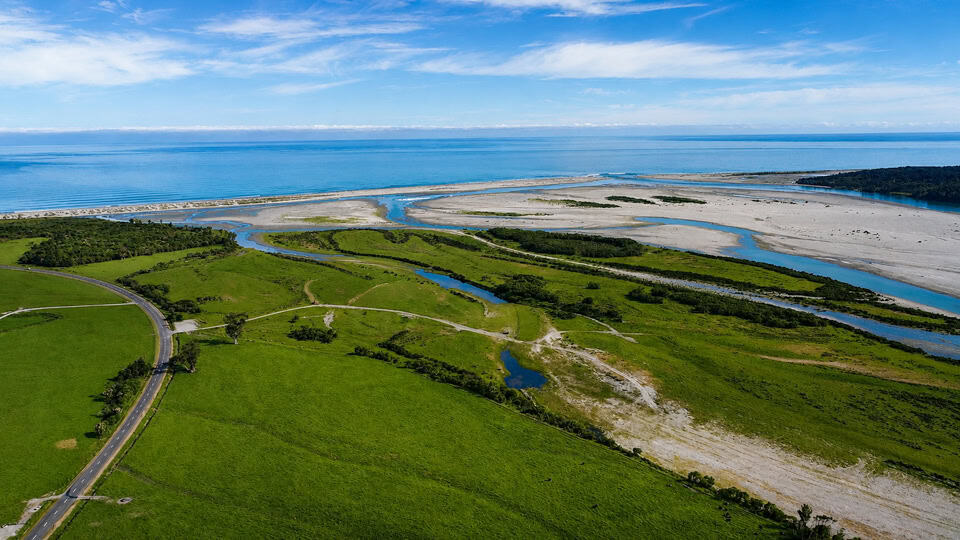
Leaving Haast, the road turns inland and begins its climb toward the Southern Alps one final time. The Haast Pass is the lowest and gentlest of the South Island’s three great alpine crossings, but it packs in some of the best short stops on the entire route — waterfalls, turquoise pools, and a dramatic shift from rainforest to dry, open high country in the space of an hour. By the time you reach Wanaka, the landscape has changed completely. Here’s what to see along the way.
This is the shortest of the three alpine crossings on this journey, but don’t let that fool you into rushing it. The road follows the Haast River upstream through dense rainforest, then climbs gently to just 563 metres at the summit — barely a third of the height of Arthur’s Pass, and low enough that it rarely closes in winter. What makes this crossing remarkable isn’t the climb itself, but what happens on the other side: within a matter of kilometres, the wet, green rainforest of the West Coast gives way entirely to the dry, golden tussock country of Central Otago.
Few drives in New Zealand show you two such different landscapes so close together. Along the way, a handful of short, easy walks lead to waterfalls and pools that are well worth the five-minute detour off the highway.
From Haast, the road follows the Haast River through lush rainforest before climbing gently to Haast Pass, the lowest alpine crossing in the Southern Alps. Along the way you’ll discover three impressive waterfalls, the famous Blue Pools, and the wilderness gateway of Makarora before emerging into Central Otago’s golden tussock country. The final stretch passes The Neck, where Lakes Wānaka and Hāwea sit side by side, before arriving in the vibrant lakeside town of Wānaka.
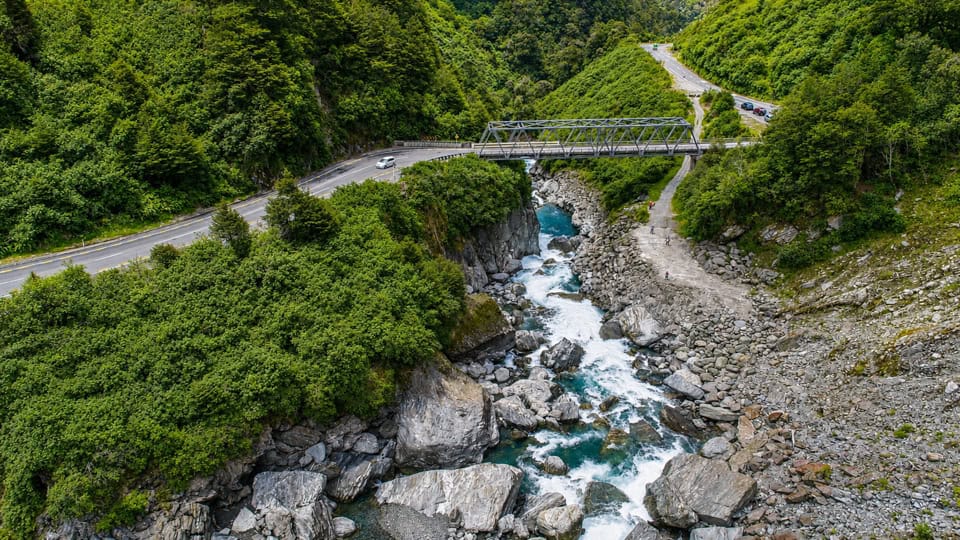
Not far past Haast, the road begins tracking the Haast River upstream, and within the first half hour you’ll pass three waterfalls, each just a short walk from the highway. None of them need more than fifteen minutes out of the car, but together they’re a good excuse to slow down before the climb to the pass begins in earnest.
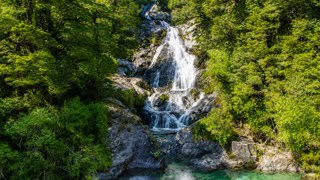
Visible right from the car park, Fantail Falls is named for the way the water spreads out across the rock face at its base, fanning out rather than dropping in a single column. Back in the late 1930s, a small hydroelectric plant operated here, generating power for the machinery used to build the road over the pass.
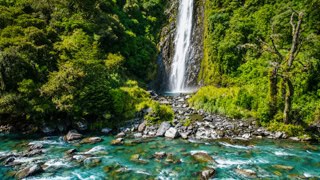
A little further on, Thunder Creek Falls drops 28 metres into the Haast River, reached by a short, easy walk through beech forest. Locals have long called it “Ninety Foot Falls,” an older, more evocative name that’s stuck around despite the metric conversion.
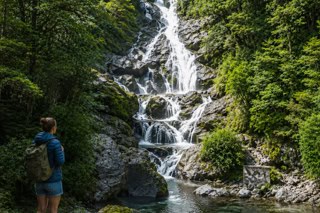
For something a bit further off the beaten path, Roaring Billy Falls is a tiered, 30-metre cascade reached via a longer walk through dense podocarp and beech rainforest — a good reminder that this valley remained largely untouched wilderness until the highway opened it up.
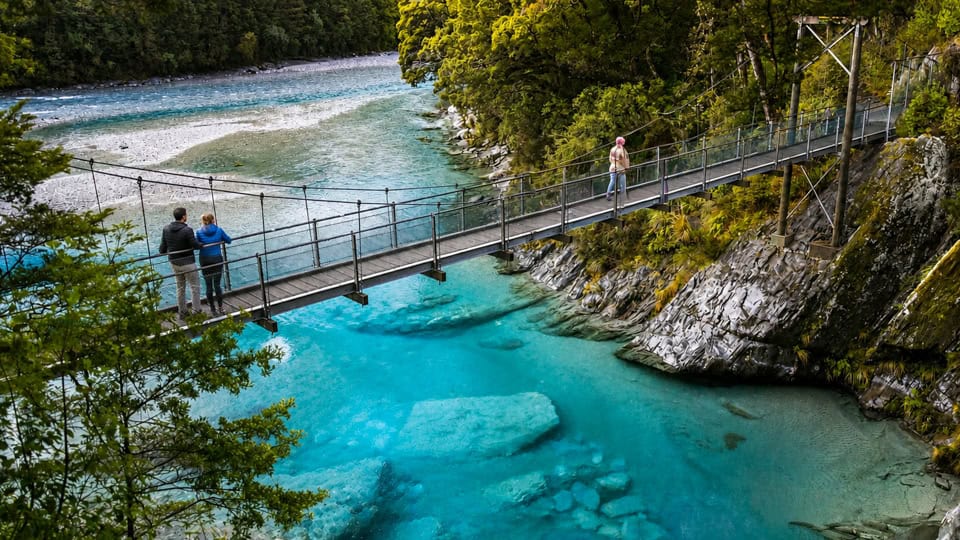
A little further along, the Blue Pools are the standout stop of this stretch — and worth the walk even if you’ve already seen plenty of waterfalls today. A swing bridge crosses high above a pool of glacial meltwater so clear and vividly turquoise it barely looks real, especially on a sunny day when the colour is at its most striking. The walk in from the car park takes about 30 minutes return, through beech forest along the Makarora River.
Good idea: the colour is best on a clear day with good light — overcast conditions mute the turquoise considerably, so if you have flexibility in your schedule, it’s worth timing this stop for a sunny patch if the forecast allows.
From the Blue Pools, the road climbs gently to the Haast Pass summit, at just 563 metres the lowest of the South Island’s three great alpine crossings — and by far the most reliable in winter, rarely closing even when Arthur’s Pass and Lewis Pass are shut by snow.
The real drama of this crossing isn’t the climb, but what happens as you come down the other side. Within a matter of kilometres, the wet, dense rainforest of the West Coast gives way to the dry, golden tussock grasslands of Central Otago — one of the most striking landscape transitions on any drive in New Zealand, and the clearest sign yet that you’ve left the West Coast behind for good.
Just past the summit, Makarora is a small settlement marking the edge of Mount Aspiring National Park — and the last real stop before the landscape opens out into Central Otago’s high country.
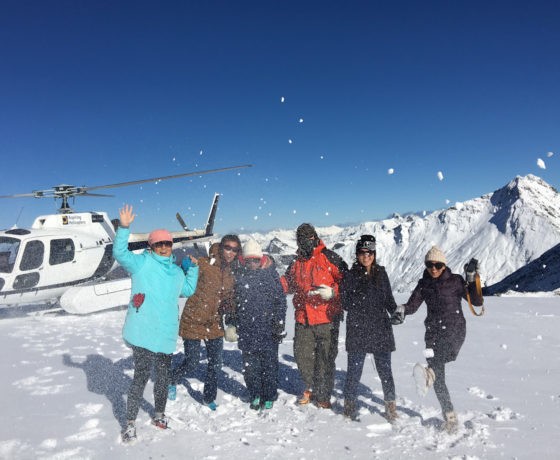
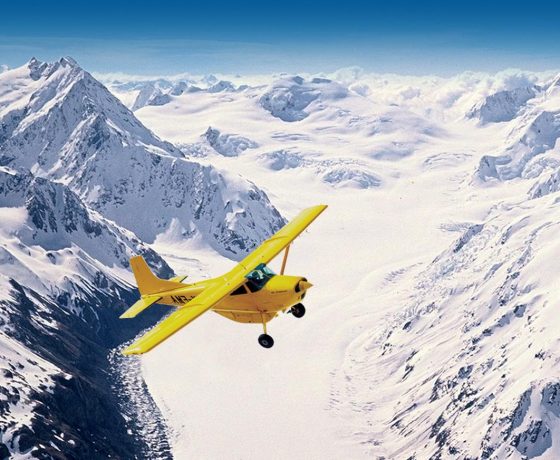
It’s also a base for two genuinely memorable wilderness experiences. Wilkin River Jets run jet boat trips up the braided Wilkin and Makarora rivers, weaving through the mountains right at the edge of the national park — see our [Wilkin River Jet Boat & Helicopter Adventure Tours page] for the full range of trips on offer. Back Country Helicopters also operates from here, offering scenic flights deeper into the surrounding alpine terrain.
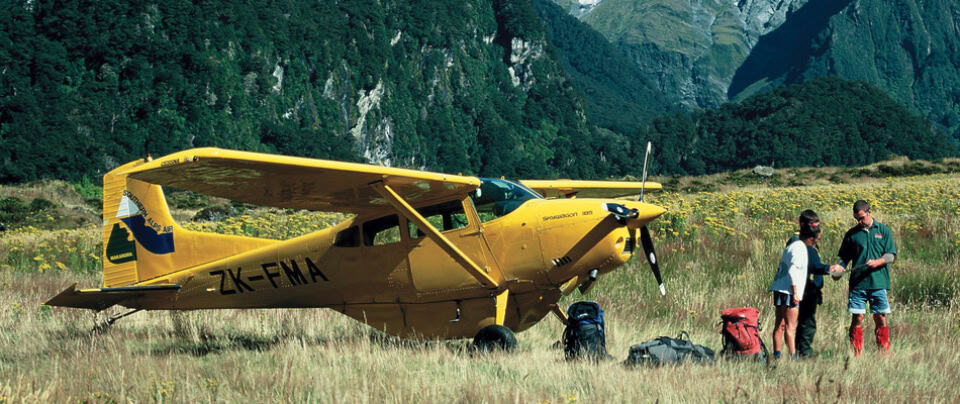
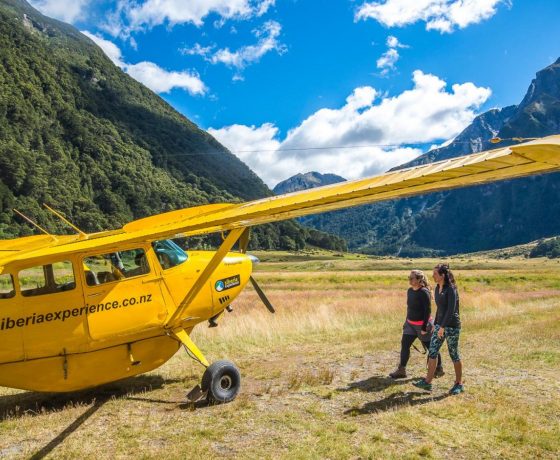
For something more immersive, the Siberia Experience combines all three ways of exploring this wilderness in one trip — a scenic flight in, a guided walk through the Siberia Valley, and a jet boat ride back out along the river. It’s a genuinely unique way to see country most travellers never get close to. See our [Siberia Experience: Fly, Walk, Jet Boat Wilderness River Adventure page] for details.
Beyond Makarora, the road opens out into Central Otago’s tussock high country, running alongside Lake Wanaka for much of the final stretch. Keep an eye out for the Neck, the narrow strip of land where the road briefly runs between Lake Wanaka and Lake Hāwea, with both visible at once — a striking moment even from behind the wheel.
Lake Hāwea itself is worth a glance as you pass, though most travellers press on to Wanaka rather than stopping here specifically
Wanaka marks the end of this stretch — a lakeside town that’s earned its reputation as one of the South Island’s most naturally beautiful bases, and one many travellers end up staying in far longer than planned.
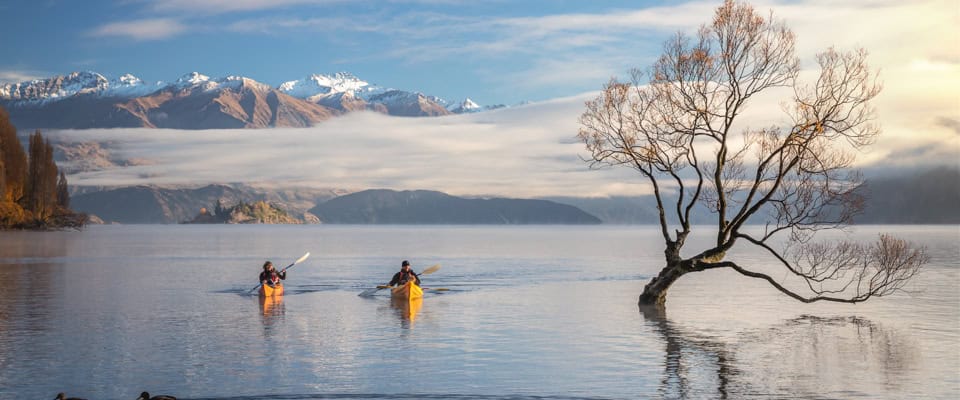
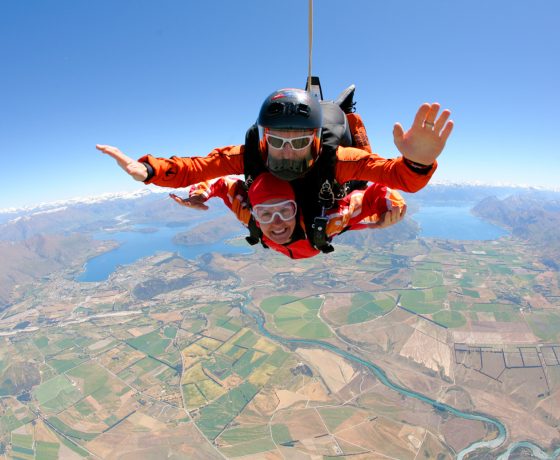
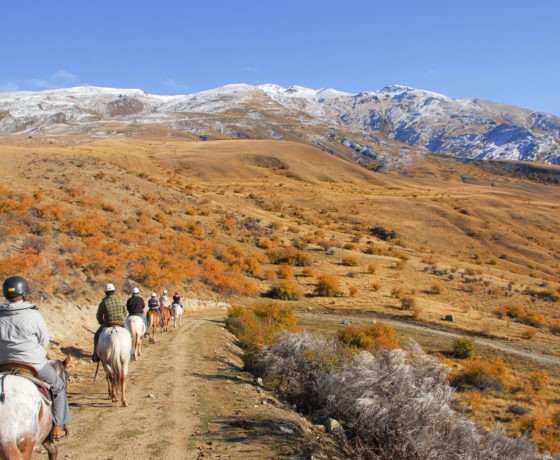
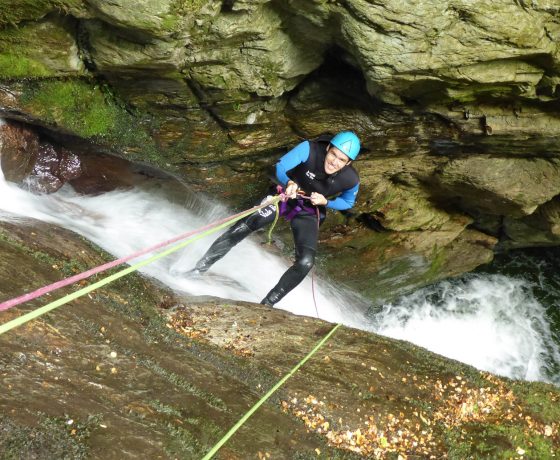
The lake itself is the centrepiece, with “That Wanaka Tree” — a lone willow standing in the shallows — one of the most photographed spots in the country. Beyond the obvious lakeside walks and photo stops, Wanaka packs in an unusually wide range of things to do for a town its size: skydiving over the lake and surrounding mountains, guided waterfall climbing adventures, and relaxed lake cruises for those who’d rather take it all in from the water. Just out of town, horse riding through Cardrona is another good way to take in the surrounding high country at a slower pace. Closer to town, Puzzling World is a long-running favourite, with its illusion rooms, tilted house, and outdoor maze.
Wanaka also has plenty of restaurants and accommodation to suit all budgets, making it an easy place to settle in for a night or several.
There’s enough here to easily fill a few days, and if you’re keeping half an eye on the budget, our [Free Things to Do in Wanaka page] covers plenty of ways to enjoy the town and surrounding scenery without spending a cent.
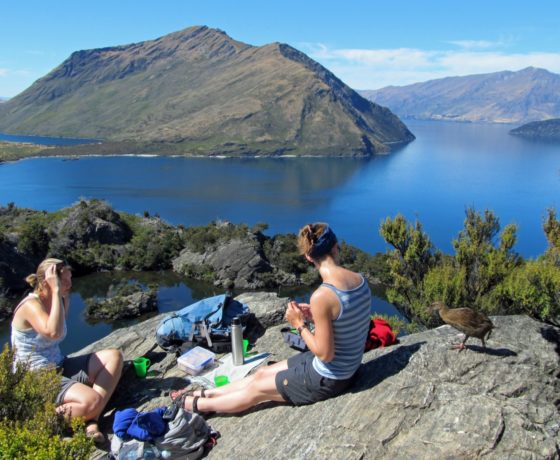
After crossing Haast Pass, Wānaka is the perfect place to slow down and spend a few days exploring. Set beside one of New Zealand’s most beautiful alpine lakes, the town offers everything from scenic cruises and lakeside walks to skydiving, horse trekking and unforgettable scenic flights. Whether you’re seeking adventure or simply relaxing beside the lake, our Things to Do in Wānaka Guide showcases the best attractions, tours and experiences to help you make the most of your stay.
Answer:
Haast Pass is the lowest and gentlest alpine crossing in the Southern Alps, reaching just 563 metres at the summit. What makes the journey so memorable isn’t the climb itself but the dramatic transition from the lush rainforest of the West Coast to the dry, golden tussock landscapes of Central Otago within a relatively short distance. Combined with waterfalls, glacial rivers and spectacular mountain scenery, it’s one of New Zealand’s most rewarding scenic drives.
Answer:
The drive from Haast to Wānaka is approximately 145 km and takes around 2 hours without stopping. Most travellers allow at least half a day, or even a full day, to enjoy the many highlights along the way, including Fantail Falls, Thunder Creek Falls, Roaring Billy Falls, the Blue Pools, Haast Pass Summit, Makarora, The Neck between Lakes Wānaka and Hāwea, and the beautiful lakeside town of Wānaka.
Answer:
Yes. The Blue Pools are one of the most popular stops on the Haast Pass drive. The easy 30-minute return walk leads through native beech forest to a swing bridge overlooking remarkably clear glacial water. The famous turquoise colour is at its brightest on sunny days when sunlight penetrates the water, while overcast conditions tend to soften the colour. If possible, plan your visit for clear weather to experience the pools at their best.
Answer:
Makarora sits on the edge of Mount Aspiring National Park and is a gateway to some of New Zealand’s finest wilderness experiences. Visitors can enjoy jet boat adventures with Wilkin River Jets, scenic helicopter flights with Back Country Helicopters, or the famous Siberia Experience, which combines a scenic flight, guided walk and jet boat journey through remote backcountry that few visitors ever see.
Answer:
Wānaka is much more than the end of the drive. Visitors can photograph the famous That Wānaka Tree, stroll the lakefront, enjoy lake cruises, experience tandem skydiving, try waterfall climbing adventures or go horse riding in nearby Cardrona. Families often enjoy Puzzling World, while those travelling on a budget can explore lakeside walks, scenic lookouts and many of the free attractions around Wānaka.
Answer:
Yes. Haast Pass is fully sealed and suitable for cars, motorhomes, campervans and motorcycles. As the lowest alpine crossing in the South Island, it is generally more reliable during winter than Arthur’s Pass or Lewis Pass. Drivers should still take care on winding sections and always check the latest NZTA road conditions before travelling, particularly after heavy rain or during winter weather.